

Why regulation, not just innovation, is the real product Nigerian fintechs are shipping.
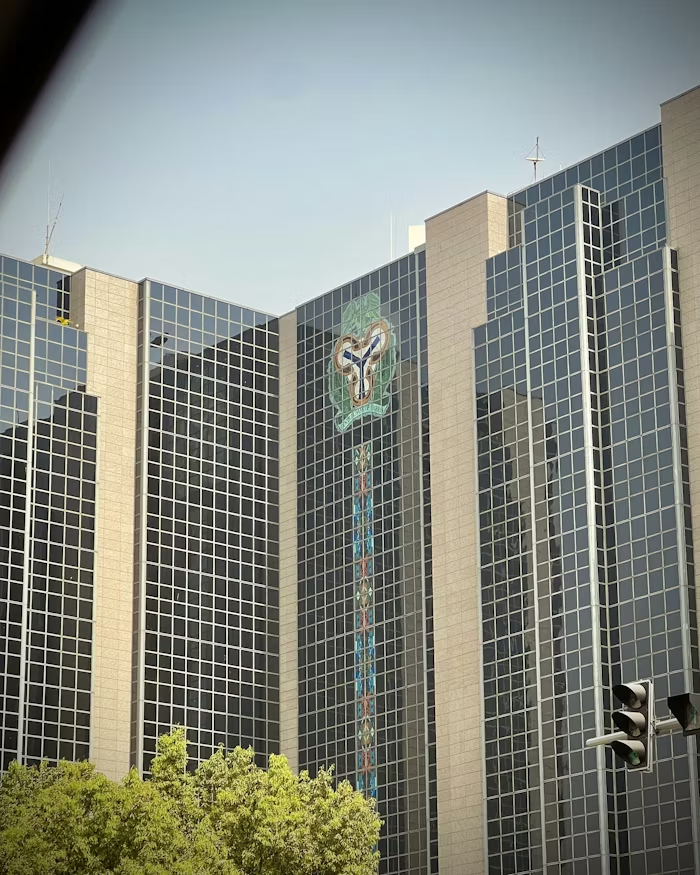
Nigeria’s fintech story is often framed as a triumph of hustle and innovation with young founders, fast code, viral adoption curves, billion‑naira transaction volumes, and the inevitable unicorn chatter. But that version of the story skips the most powerful character in the room, the Central Bank of Nigeria (CBN).
Quietly, persistently, and sometimes painfully, the CBN has been reshaping how fintechs operate, scale, raise capital, and even survive. In Nigeria, regulation is not a footnote to innovation; it is the terrain itself.
Every major fintech pivot of the last few years, from payment routing and POS infrastructure to crypto banking access and cross‑border remittances, has had the CBN’s fingerprints all over it. Some policies have accelerated adoption. Others have forced painful rewrites of business models. All of them have made one thing clear, which is that in Nigerian fintech, your real moat is not just product‑market fit, but regulatory resilience.
“In Nigeria, regulation is not a speed bump. It is the road.”
For industry players, analysts, and investors, understanding how CBN policies keep reshaping Nigeria’s fintech playbook is no longer optional. It’s strategic intelligence.
How the CBN thinks about fintech
To understand the impact, you first have to understand the philosophy. The CBN does not see fintech primarily as a startup ecosystem. It sees it as financial infrastructure, systemically important, politically sensitive, and economically risky if mishandled.
That mindset explains why CBN policies often feel conservative, reactive, and heavy‑handed to founders, but logical to regulators. Their priorities are consistent, and it borders around issues like monetary stability, anti‑money laundering and counter‑terrorism financing (AML/CFT), consumer protection, systemic risk management, and innovation, which seems to be welcome but only within those guardrails.
This is why the CBN prefers circulars, guidelines, and incremental tightening over grand public experiments. It’s also why fintechs are often forced to retrofit compliance after growth, rather than build freely and regulate later.
“CBN policies don’t aim to kill fintechs, they aim to domesticate them.”
Cash policies
One of the most underestimated forces shaping fintech behaviour in Nigeria is cash policy.
When the CBN adjusts withdrawal limits, cash‑handling charges, or ATM/POS rules, the effects ripple far beyond banks. Wallets, agency networks, POS aggregators, and merchant acquirers feel it immediately.
Tighter cash rules typically lead to higher on‑platform balances in wallets, increased POS and transfer volumes, greater pressure on instant settlement and uptime, liquidity stress for agents and small merchants
But there’s a hidden trade‑off. As cash becomes harder or more expensive to access, user tolerance for failed transactions drops sharply. Fintechs are forced to invest more in reliability, reconciliation, and customer support, all of which raise operating costs.
For early‑stage fintechs running thin margins, these shifts can quietly break the model.
“Every cash policy is also a product decision fintechs didn’t make but must now support.”
Rules & the death of ‘Lean’ infrastructure
If there’s one area where CBN policy has fundamentally changed fintech operations, it’s payments infrastructure.
Recent directives around payment routing, terminal connectivity, and PSP obligations have made one thing clear: lean infrastructure is no longer acceptable at scale.
Fintechs that once relied on Single acquiring banks now operate on minimal redundancy, outsourced compliance and have been forced to rebuild.
Mandatory dual connectivity for terminals, stricter routing requirements, and deeper reporting obligations have increased:
- Capital expenditure (capex)
- Engineering complexity
- Compliance staffing costs
For POS aggregators and merchant acquirers, this has squeezed margins even further. Many are now stuck between rising regulatory costs and merchants unwilling to pay higher fees.
The result? Consolidation pressure.
Smaller players without balance‑sheet strength or patient investors are quietly exiting, merging, or becoming white‑label operators.
“In Nigerian payments today, redundancy is not luxury, it’s regulation.”
Crypto prohibition to controlled access
No policy shift better illustrates the CBN’s evolving approach than crypto.
The 2021 restriction on banks servicing crypto‑related businesses effectively pushed many startups into regulatory exile. Some shut down. Others operated through informal banking arrangements, foreign accounts, or complex workarounds.
Then came a recalibration.
By late 2023, the CBN introduced guidelines allowing banks to open accounts for Virtual Asset Service Providers (VASPs), under strict conditions.
This wasn’t a crypto embrace. It was a containment strategy.
Under the new framework, crypto‑adjacent fintechs must now deal with intense KYC and transaction monitoring, explicit reporting obligations, restricted account usage, and constant compliance audits
For serious players, this has brought legitimacy and banking access. For opportunistic builders, it has raised the cost of participation significantly.
“Crypto didn’t get freedom. It got supervision.”
The message is unmistakable, speculative innovation is tolerated only when it becomes traceable.

Cross‑Border payments, remittances
While some policies tighten, others quietly open doors.
Recent reforms around International Money Transfer Operators (IMTOs), FX liberalisation, and the Pan‑African Payment and Settlement System (PAPSS) have reshaped the remittance landscape.
Nigeria remains one of Africa’s largest recipients of cross‑border flows, and the CBN understands the macroeconomic importance of these inflows.
By enabling regulated access to new settlement rails, especially intra‑African ones, the CBN is signalling a shift to lower dependence on dollar‑heavy correspondent banking, greater formalisation of cross‑border fintech flows, and increased scrutiny of documentation and settlement processes
For remittance fintechs, this creates opportunity, but also complexity. Integration with PAPSS and compliant FX handling requires legal, treasury, and technical sophistication that many startups underestimate.
“Cross‑border scale is no longer about volume alone. It’s about compliance velocity.”
Winners and losers in this new playbook
Likely winners
- Fintechs that treat compliance as a core product function
- PSPs that invest early in redundancy and multi‑rail infrastructure
- Remittance players aligned with formal African settlement systems
- Companies with patient capital and long regulatory runways
Likely losers
- Thin‑margin POS networks without infrastructure depth
- Startups dependent on informal banking relationships
- Crypto players hoping to ‘outgrow’ regulation
- Founders who treat compliance as an afterthought
The biggest shift is seen in fintech work teams; in this new dispensation, compliance teams are no longer back‑office functions; they sit at the centre of product strategy.
A regional reality
Much of the regulatory conversation happens in Abuja or Lagos boardrooms, but its effects are felt everywhere.
In places like Aba, Asaba, Enugu, Uyo, and Port Harcourt, fintechs often operate closer to informal economies, agency banking, SME payments, and trade‑driven remittances.
Here, regulatory shocks hit harder:
- Agents struggle with liquidity under cash restrictions
- Merchants lose patience with failed POS transactions
- Smaller fintechs lack the capital buffers to absorb sudden compliance costs
Yet these regions also present opportunity. Fintechs built with regulatory resilience and local context can quietly dominate underserved markets while bigger players battle complexity at scale.
“Regulatory resilience is how regional fintechs survive, and sometimes win.”
A practical playbook for founders
If you’re building or investing in Nigerian fintech today, the uncomfortable truth remains that policy volatility is the baseline.
Here are some practical steps founders can use:
Run a regulatory impact audit — map every CBN circular touching your product.
Design for redundancy — single‑point dependencies are existential risks.
Model cash‑policy scenarios — especially for agent and merchant networks.
Hire senior compliance early — not as a reaction to audits.
Engage regulators proactively — silence is not neutrality.
The fintechs that survive the next decade will not be the loudest. They’ll be the most adaptable.
Regulation as reality, not resistance
There’s a temptation in tech circles to frame regulation as the enemy of innovation. In Nigeria, that framing is lazy.
The CBN is not going away. Its influence will likely deepen as fintechs become more systemically important.
The smarter question, therefore, shouldn’t be “How do we avoid regulation?” but rather “How do we build businesses that thrive inside it?” Because in Nigeria’s fintech future, the real playbook isn’t just written in code.
It’s written in circulars. If you’re a founder, operator, or analyst navigating these shifts, this conversation is only just beginning.
“In Nigerian fintech, survival is a compliance skill not just a technical one.”